International Day of Forests: UNDP partnership connects communities and technology to restore Mongolia’s forests
Mar. 20, 2026 09:00
UNDP Seoul Policy Centre’s video ‘Connected by the Forest’, released to mark the International Day of Forests, highlights forest protection and restoration efforts in Mongolia (Provided by UNDP Seoul Policy Centre)

UNDP Seoul Policy Centre’s video ‘Connected by the Forest’, released to mark the International Day of Forests, highlights forest protection and restoration efforts in Mongolia (Provided by UNDP Seoul Policy Centre)
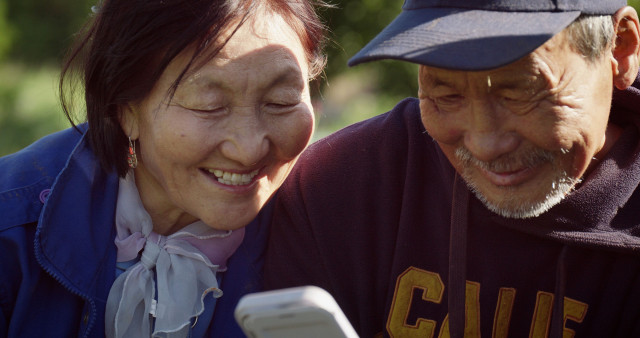
Forest User Group members and local residents using the e-Forest app (Provided by UNDP Seoul Policy Centre)

Mongolian forest landscape (Provided by UNDP Seoul Policy Centre)
In Selenge Province, local Forest User Groups have been established to live in harmony with the forest. Communities depend on forest resources for firewood, food and income, while also playing a leading role in protecting and restoring them.
“We collect pine nuts, mushrooms and a variety of berries, and harvest different kinds of plants for tea,” said Dolgor Dagva, Head of the Unur-Erdene Forest User Group. “We also use the forest for timber and, in return, we look after the forest.”
Forest User Groups also take part in reforestation and forest restoration efforts. They collect seeds from different tree species, raise seedlings and support the regeneration of degraded land. In some areas, the practice is to plant 100 new trees for every tree that is cut. At the same time, forests remain under constant threat. Forest User Groups deploy rangers to monitor pest outbreaks, illegal logging and forest fires.
“Because Forest User Groups work continuously in the forest, they are often the first to notice and report issues such as forest fires, pest infestations or illegal logging,” said Naranbaatar Buyandelger, Senior Forest Engineer for the Eroo Region in Selenge Province. “We then work together with the relevant authorities to take the necessary measures.”
UNDP in Mongolia works with the Government of Mongolia to advance the Sustainable Development Goals (SDGs), including through improved forest management. To address complex environmental challenges, this work has also drawn on the development experience and expertise of the Republic of Korea.
During the 1970s, the Republic of Korea reversed decades of deforestation through nationwide restoration efforts. Today, it uses digital tools to manage forest resources more effectively.
“At the UNDP Seoul Policy Centre, we share Korea’s development experience with other countries in support of the Sustainable Development Goals,” said Soojin Jeong, Policy Analyst at the UNDP Seoul Policy Centre. “With support from the Ministry of Foreign Affairs of the Republic of Korea, our Centre helped UNDP Mongolia design an e-platform that can track forest resources and related issues.”
Through this cooperation, Mongolia developed the e-Forest digital platform, which is designed to help monitor and track the use of forest resources across the country.
“With the support of the UNDP Seoul Policy Centre, the e-Forest digital platform has been developed in Mongolia to improve the monitoring and tracking of forest resources nationwide,” said Oyusanaa Byambasuren, Director General of the National Forest Agency of Mongolia.
The platform enables Forest User Groups and local communities to collect and upload information on forest-related activities from the field so that problems can be identified and acted on more quickly.
“When fully implemented, the e-Forest platform will greatly simplify the monitoring and tracking of timber-related activities,” said Erdenebat Erdenejav, Programme Analyst at UNDP Mongolia. “As a result, it is expected to help reduce illegal logging and strengthen forest protection.”
Under Mongolia’s Green Development Initiative, the country aims to plant one billion trees by 2030. Digital tools such as e-Forest are expected to play an important role not only in protecting existing forests, but also in safeguarding newly planted areas.
Mongolia’s forests remain under pressure, but they are not beyond recovery. The story of ‘Connected by the Forest’ shows how international cooperation, local participation, and digital innovation can come together to protect and restore forests for future generations.
The video and photo story were jointly produced by the UNDP Seoul Policy Centre and UNDP Mongolia as part of the SDG Partnership programme supported by the Ministry of Foreign Affairs of the Republic of Korea.
About the United Nations Development Programme
UNDP is the leading United Nations organization fighting to end the injustice of poverty, inequality, and climate change. Working with our broad network of experts and partners in 170 countries, we help nations to build integrated, lasting solutions for people and planet. Learn more at undp.org or follow at @UNDP.
About UNDP Seoul Policy Centre
UNDP Seoul Policy Centre is a facilitator of innovative development cooperation to catalyse the achievement of the Sustainable Development Goals. Through its SDG Partnerships programme and other South-South and Triangular Cooperation initiatives, the Centre supports countries by sharing innovative, tested-and-proven practices and policy tools on strategic development issues globally. Learn more at undp.org/policy-centre/seoul or follow at @UNDPSPC.
Website: https://www.undp.org/ko/policy-centre/se...
Contact
UNDP Seoul Policy Centre
Sujin Kim
+82-2-3290-5207
Send Email
 올인원 PR 플랫폼
기자 검색부터 배포·모니터링까지 한 곳에서 끝내세요
-
7월 8일 09:00

Related section
